
VIP member

Single machine bag pulse equipment
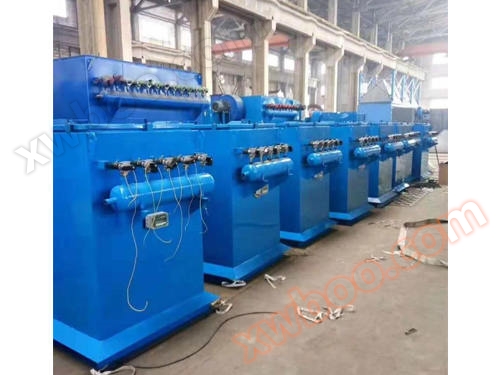
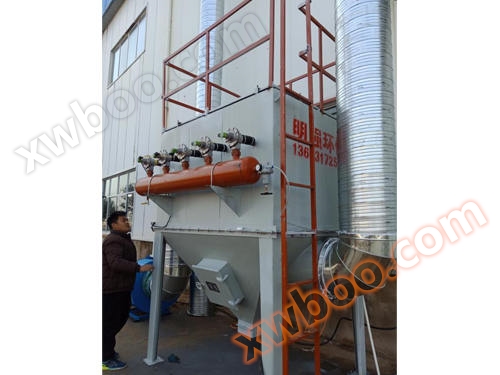
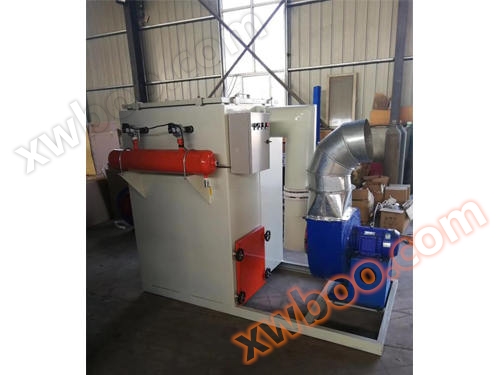
The single machine bag pulse equipment adopts the pulse blowing method for dust cleaning, which has good dust cleaning effect, purification, and
Product details
 |
 |
 |
 |
 |
 |
 |
 |
The single machine bag pulse equipment adopts the pulse blowing method for dust cleaning, which has the advantages of good dust cleaning effect, large purification and processing air volume, long filter bag life, low maintenance workload, and operation.
Single machine bag pulse equipment is a single unit dust removal device with an automatic dust cleaning structure. This bag filter is widely used in industrial and mining enterprises such as cement, mineral powder, mining, metallurgy, building materials, machinery, chemical industry, and grain processing.
structure
1. Upper box: including a liftable cover plate (or fastening cover plate) and an air outlet.
2. Medium box body: including porous plate, maintenance door, filter bag, keel, Venturi tube, etc.
3. Lower box: including pressure measuring connectors, etc.
4. Spray system: including pulse controller, electromagnetic pulse valve, spray pipe, air bag
working principle
The working principle of a dust collector is as follows: the dust containing gas enters the filtering chamber through the ash hopper (or lower open flange), and the coarser particles directly fall into the ash hopper or ash bin. The dust containing gas is filtered by the filter bag, and the dust is trapped on the bag surface. The clean gas passes through the bag mouth to the clean air chamber and is discharged into the atmosphere by the fan. When the dust on the surface of the filter bag continues to increase, causing the equipment resistance to rise to the set value, the time relay (or micro differential pressure controller) outputs a signal, and the programmable controller starts to work. The pulse valves are opened one by one, allowing compressed air to blow and clean the filter bag through the nozzle, causing the filter bag to suddenly expand. Under the action of reverse airflow, the dust attached to the bag surface separates from the filter bag and falls into the ash hopper (or ash bin), and the dust is discharged from the ash discharge valve. After all filter bags are blown clean, the dust collector resumes normal operation.
Debugging of dust collector
Single machine debugging: After the installation of the dust collector is completed, various valves and equipment, such as the silo wall vibration motor, ash discharge valve, buried scraper conveyor, etc., should be debugged manually first, then electrically. All mechanical components should be free of looseness or jamming, easy and flexible, and have good sealing performance. Perform another 8-hour no-load operation.
Online inquiry
-
Contacts
-
Company
-
Telephone
-
Email
-
WeChat
-
Verification Code
-
Message Content
-